Fleet maintenance software for rideshare fleets
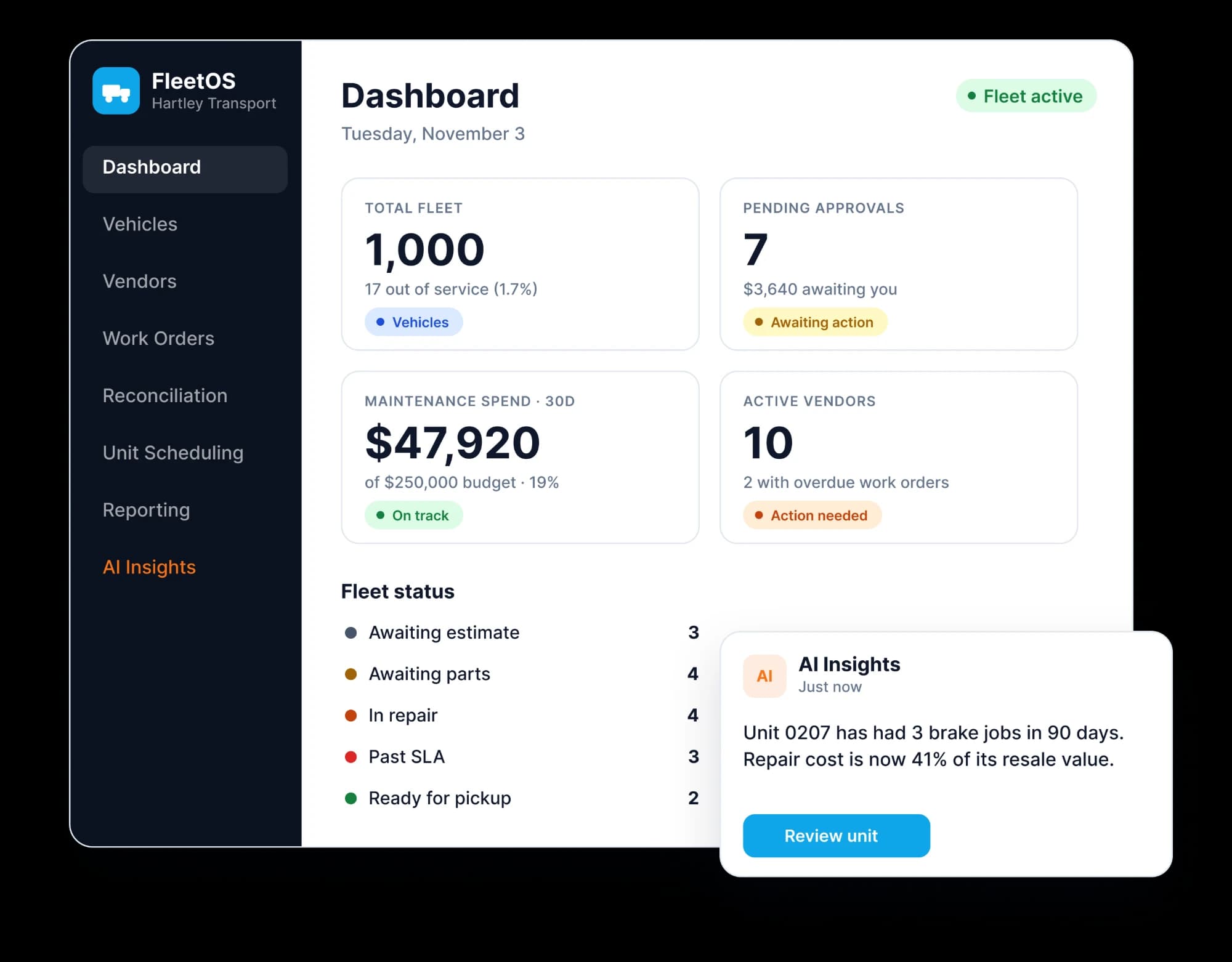
You know what a vehicle earns per day, so you know what every idle day costs. What you usually can't see is why the idle days happen. FleetOS puts every vehicle on one live view — what's in repair, what's due for service, and which insurance, registrations and inspections are about to expire — and runs each repair end to end, from the driver drop-off to the return date, with any shop and with drivers on the channel they already answer.
Quick answer
Rideshare fleet maintenance software tracks every vehicle's service schedule, repairs, approvals and compliance dates, and shows what is happening to a vehicle while it sits at an outside shop. It matters more in rideshare than in most fleets because the revenue per vehicle per day is known precisely and fixed costs continue regardless — fleet operators generally price an idle vehicle at $500 to $1,500 a day. FleetOS puts every vehicle on one live view, from repairs to service due dates to expiring insurance and inspections, and runs each repair end to end, from the driver drop-off to the return date, with any shop.
What FleetOS does for a rideshare fleet
AI fleet administrator
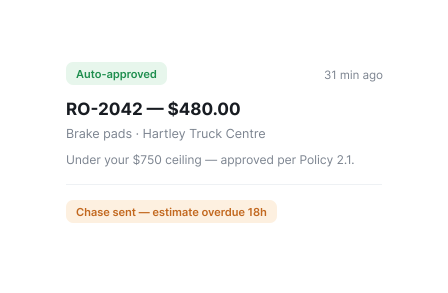
The AI fleet admin handles repair authorization, vendor coordination, and compliance, 24/7. Routine estimates clear against your thresholds, shops that go quiet get chased, and anything unusual escalates to a person.
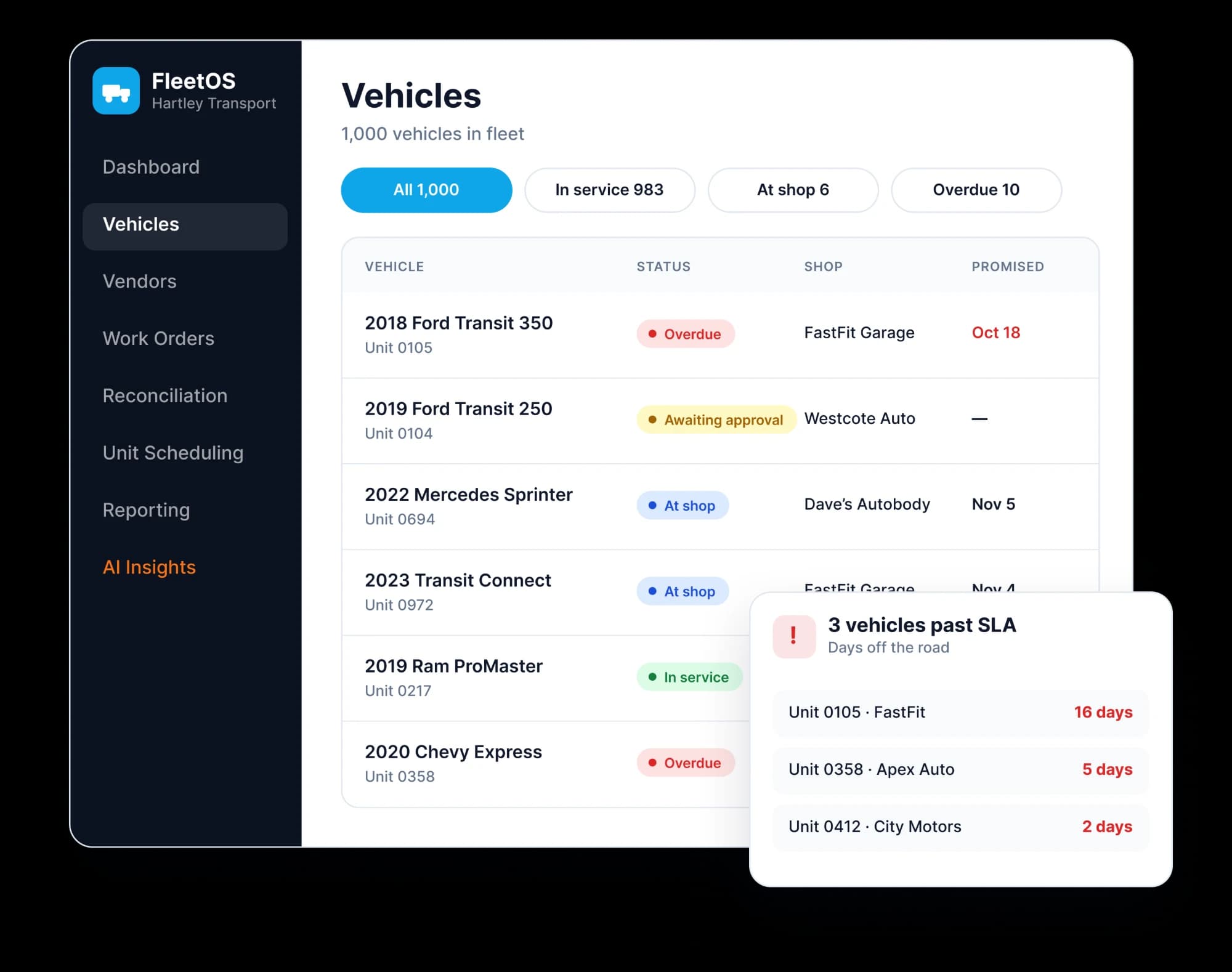
Every vehicle, on one live view.
What's in repair and why, what's due for service, and which insurance, registrations and inspections are about to expire — your inactive rate, with its causes.
Any shop, no onboarding.
Work orders arrive as a link. The shop updates status, adds photos and sends estimates with nothing to install.
Driver handoffs on the record.
Drop-offs and collections recorded against the vehicle, not sitting in one coordinator's phone.
PM that keeps up with the mileage.
Service milestones per vehicle, grouped so only as many cars are off the road at once as you can afford.
Vendors you can compare.
Turnaround, repeat work and spend per shop, not just price.
Why does downtime cost more in a rideshare fleet than anywhere else?
Downtime costs more in a rideshare fleet because the revenue per vehicle is known precisely and the vehicle is the entire product.
A known daily rate stops to the cent while financing, insurance and depreciation keep running at full price — toward the top of the $500 to $1,500 band for a high-utilization vehicle, since almost none of its cost is avoidable when it isn't moving. More in what vehicle downtime costs a fleet operator. And there's a second loss behind the first: a driver without a vehicle for a week often doesn't wait a week, so churn lands a month later on a different line.
Which is why the inactive rate is the number that matters. Returning a vehicle you already own to service adds earning capacity with no capital, no financing and no lead time — the cheapest growth available to you.
How do you track a vehicle when the driver takes it to the shop?
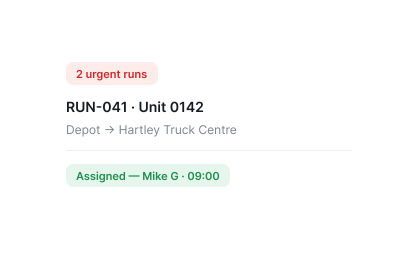
FleetOS tracks a driver drop-off by keeping the handoff on the vehicle's record instead of in someone's phone.
In most rideshare operations the person dropping the vehicle off isn't an employee. They message a coordinator, and that thread is where the knowledge lives, so when the coordinator is off, nobody knows which shop the car is at. FleetOS keeps the drop-off on the vehicle's record instead, so its status updates and the next person to look can see where the car is.
How do approvals work when nobody is at a desk?
Repair approvals run against rules the fleet sets, not against who happens to be at a desk.
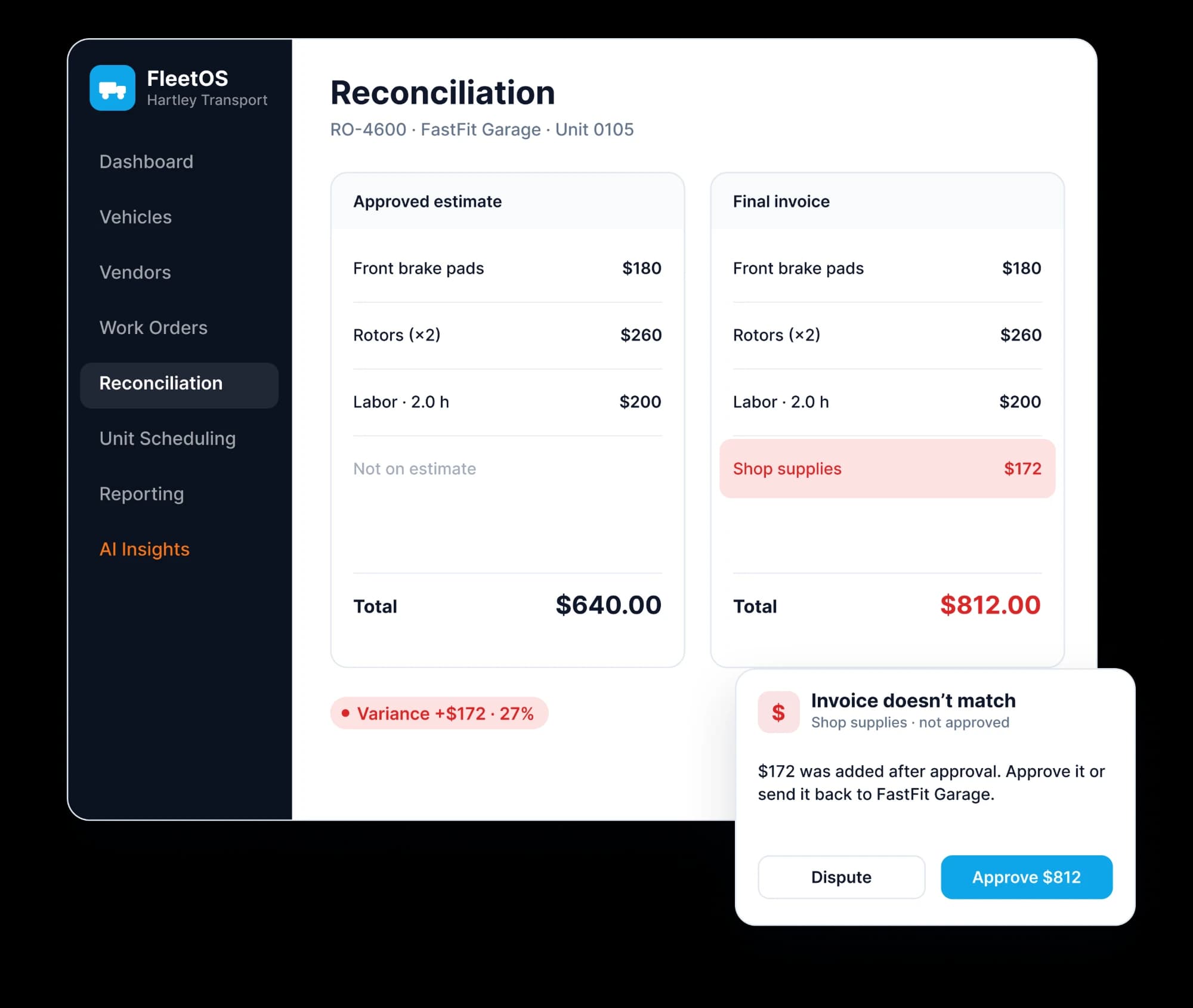
Rideshare repair volume is high and mostly routine — brakes, tires, a service, a sensor. Those estimates don't need a human read, they need a policy applied. In FleetOS the rules are set once, the AI fleet admin clears what fits and chases shops that go quiet, and anything that doesn't fit goes to a person. A collision at 2am on a highway is still a person's job. It matters because parts can't be ordered until work is authorized, so a day lost to an approval is added before the parts clock has started.
Do we have to move our repairs to new shops?
No. FleetOS works with the shops you use today.
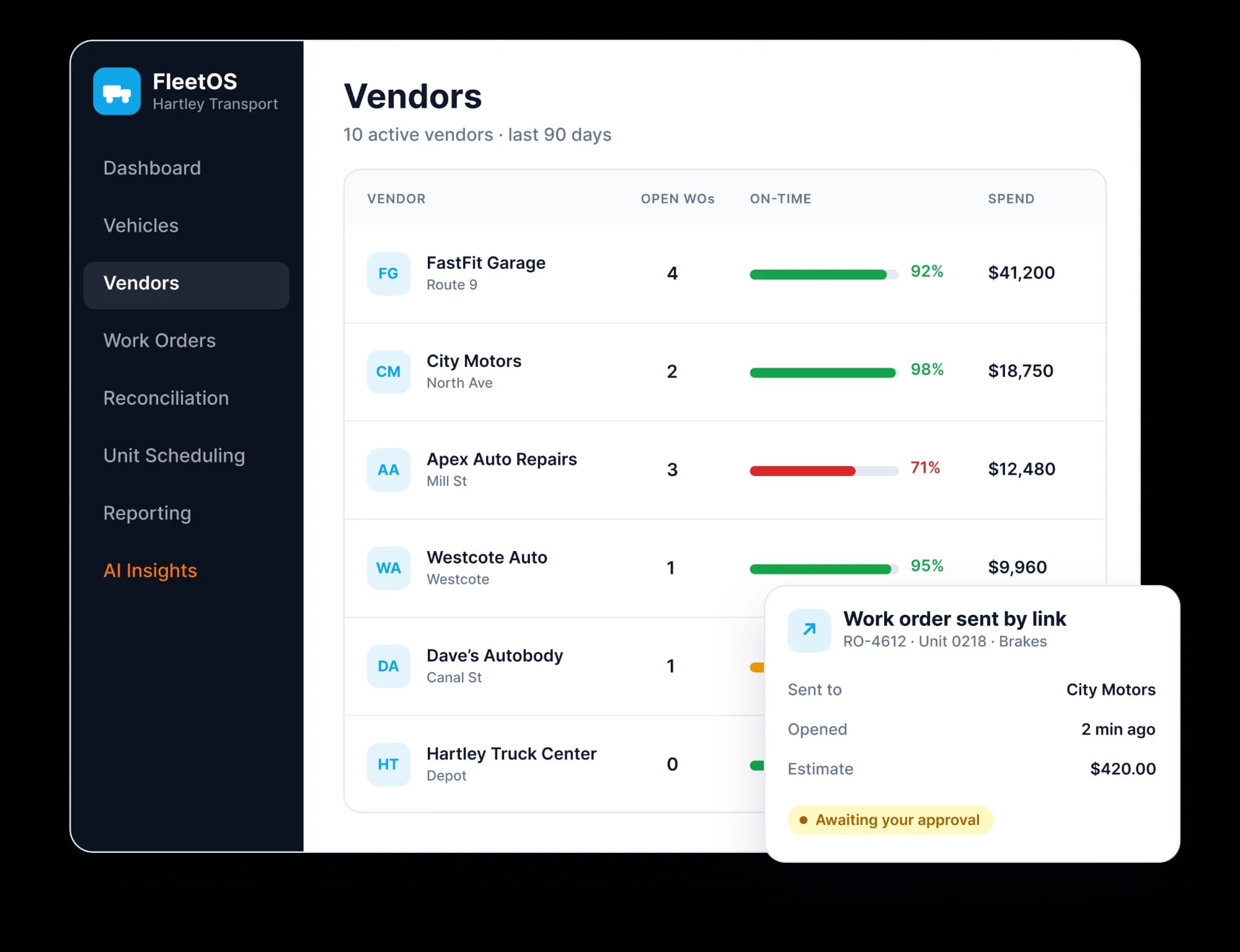
Work orders arrive as a link with no signup and nothing to install, and the link keeps working through the repair. Shops that want the full system can switch on ShopOS, with no software subscription when they use ShopOS Payments, and when they do, status and approvals move between both sides without anyone sending an update. What changes immediately is that you can compare vendors on turnaround and repeat work rather than on price alone.
How does high-mileage preventative maintenance work?
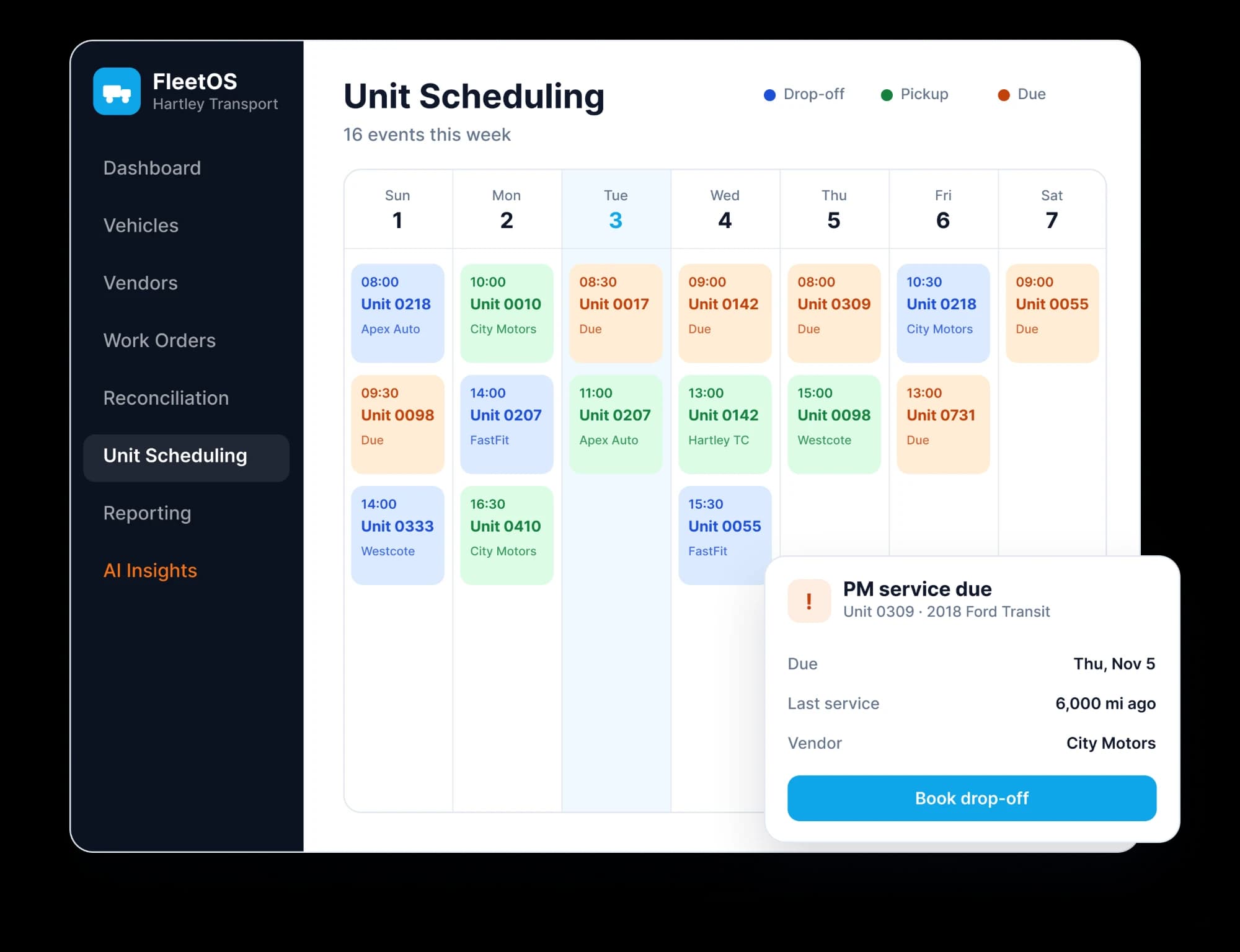
A rideshare vehicle can cover a retail year's mileage in a quarter, so intervals arrive constantly and the schedule has to be planned rather than reacted to.
FleetOS holds PM rules per vehicle — labor operations and mileage milestones. Vehicles approaching a milestone surface as due, so services get grouped against how many vehicles you can have off the road at once. Rental and commercial operations often place a hold in their own booking system ahead of a service so a vehicle doesn't come due mid-trip; FleetOS is where the service that hold protects gets planned and tracked.
What about inspections and vehicle eligibility?
Rideshare vehicles carry obligations beyond ordinary registration, and they vary by city.
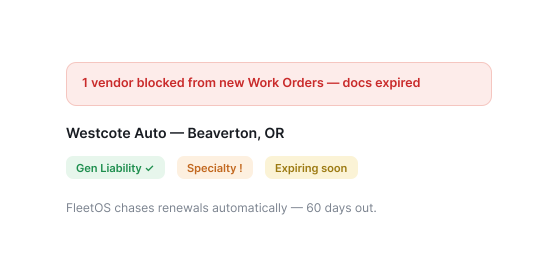
Periodic vehicle inspections are required for ride-hail work in many jurisdictions, with their own paperwork and expiry dates, and local licensing adds vehicle age or condition rules on top. A vehicle out of compliance is off the road just as surely as one with a failed transmission, and for longer if nobody saw the date coming. FleetOS keeps inspections and renewals on the same record as the repair history.
What should a rideshare fleet measure that it probably doesn't?
The measure most rideshare fleets lack is days to return to service, viewed as a distribution rather than an average and split by cause.
Averages hide the long tail, and the long tail is where the money is — the vehicle that sat three weeks, not the one that sat two days. If you measure one thing first, measure the interval between estimate sent and estimate approved: it sits entirely within your control and needs nothing from any shop. More in how fleet operators measure maintenance performance.
Key facts
- An idle vehicle costs $500–$1,500 a day across lost revenue and fixed costs; a high-utilization rideshare vehicle sits toward the top of that range.
- Returning an idle vehicle to service adds earning capacity with no capital, no financing and no lead time, unlike buying its replacement.
- The driver who drops a vehicle off is usually not an employee, so the handoff lives in a messaging thread rather than in a system.
- Rideshare mileage accrues fast, so PM intervals arrive continuously and have to be planned against how many vehicles can be off the road at once.
- Ride-hail vehicle inspection and eligibility rules vary by city and carry their own expiry dates, independent of mechanical condition.
- Shops receive work orders as a link, with no signup or install, so vendors don't need to change for a fleet to adopt FleetOS.
Rideshare fleet FAQs
What is fleet maintenance software for rideshare fleets?
How does FleetOS reduce a fleet's inactive rate?
Does FleetOS work with rental and car-subscription fleets too?
Can FleetOS work with the shops we already use?
Does FleetOS track vehicle inspections and renewals?
How is FleetOS priced for a rideshare fleet?
The cheapest vehicles you'll ever add are the ones you already own
FleetOS puts every rideshare vehicle on one live view — in repair, due for service or about to expire — and runs each repair end to end, so the cars you're already paying for spend more of the month earning.