Fleet maintenance software for truck and heavy-duty fleets
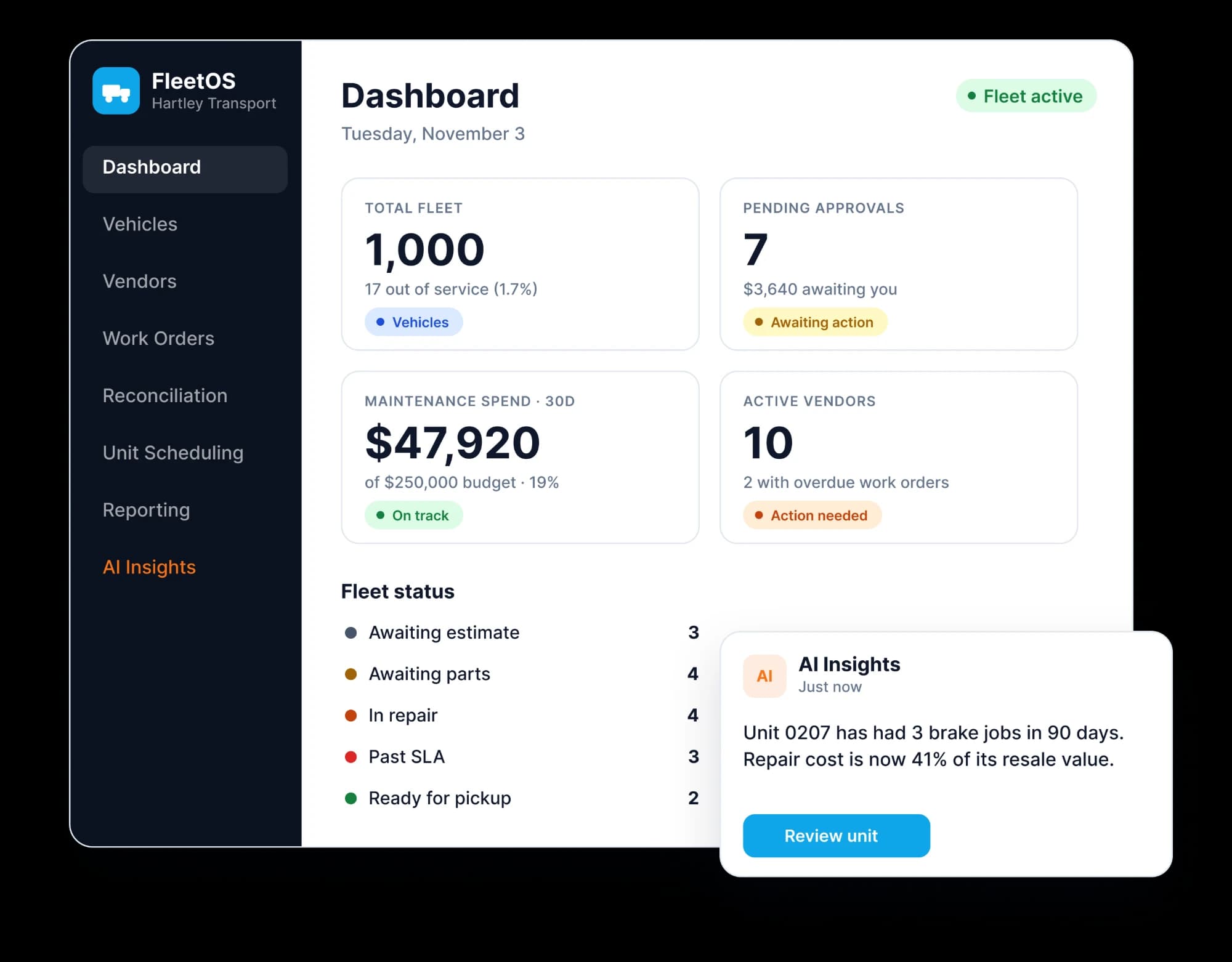
A truck down is a load not moving, a driver not driving, and a customer who was promised a delivery window. FleetOS tracks every unit through a repair at any shop, wherever the truck is, and keeps its service and inspection history on the same vehicle file.
Quick answer
Truck fleet maintenance software manages PM schedules, repairs, vendor work, cost per unit and inspection records. Heavy-duty differs from light fleets in two ways: the cost per down day is the highest of any segment, and breakdowns often happen away from base. FleetOS keeps the repair and the record together, with any shop.
What FleetOS does for a truck fleet
AI fleet administrator
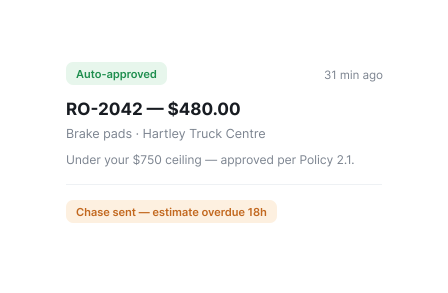
The AI fleet admin handles repair authorization and vendor coordination, 24/7. Estimates clear against your thresholds, so a roadside repair isn't waiting on someone reaching a desk.
Every unit in one view, on the road or off it.
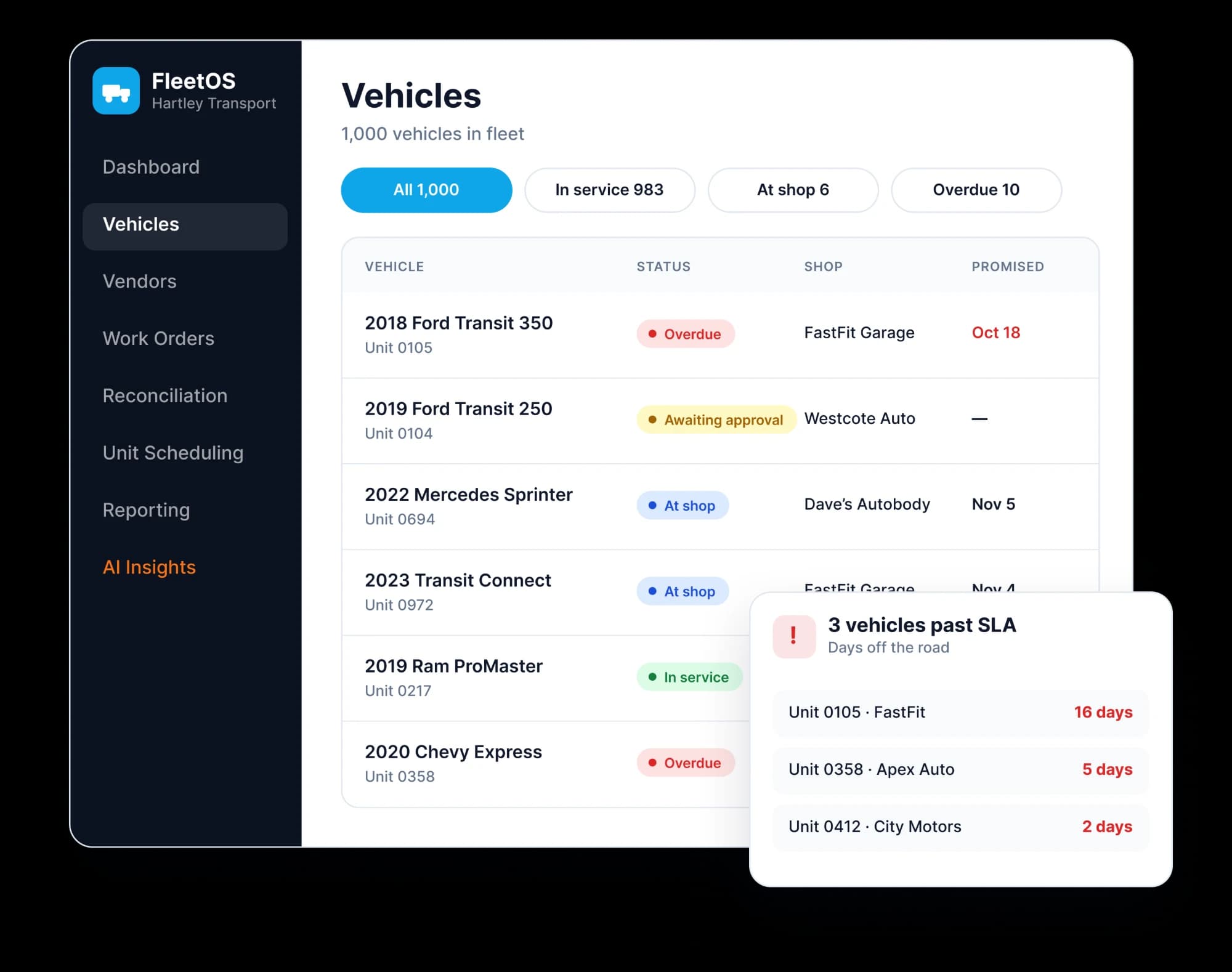
Tractors and trailers, running or in a shop — yours or anyone else's — with what each is waiting on, what's due for service, and which insurance, registrations and inspections are about to expire.
Any shop, no onboarding.
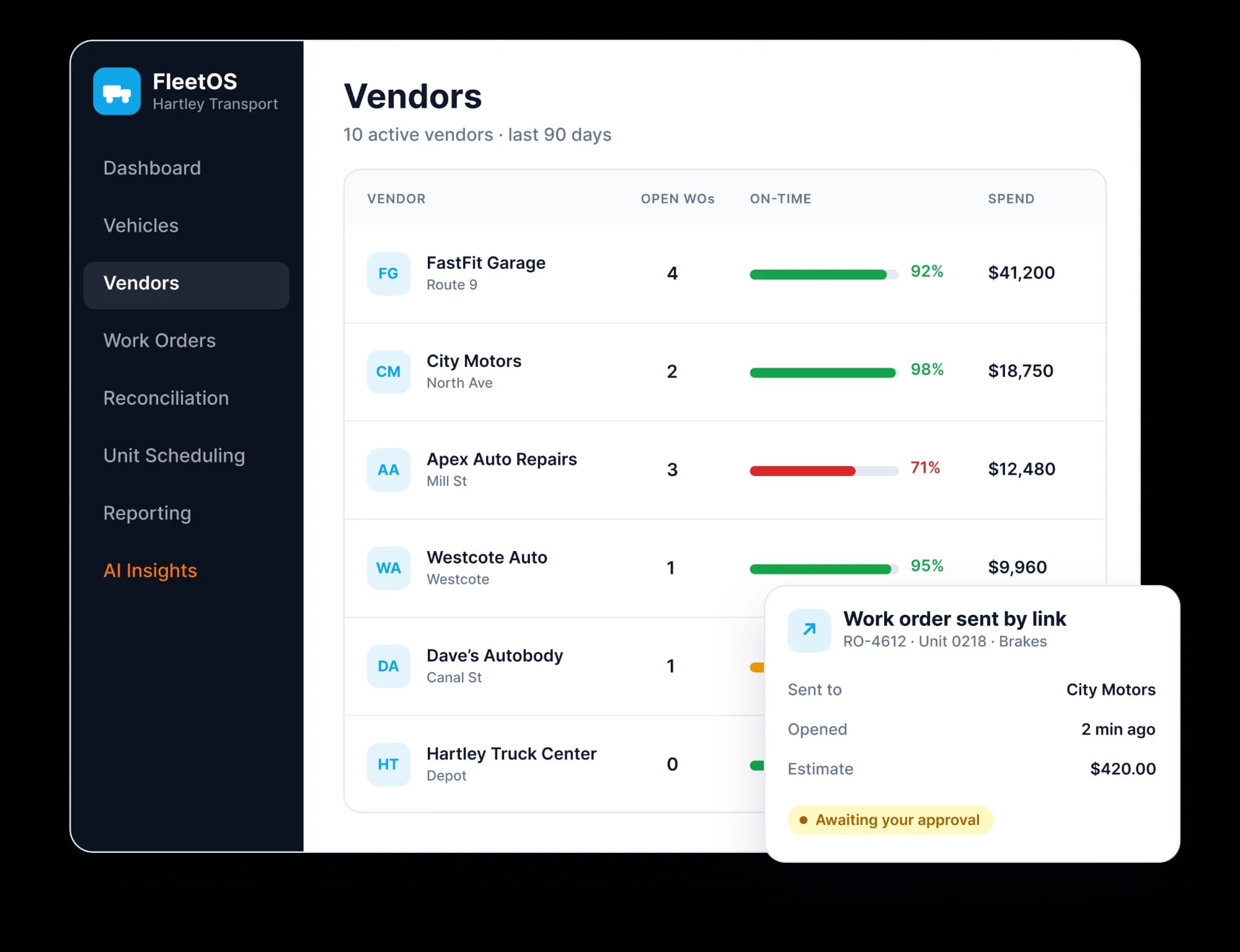
Work orders arrive as a link. The shop updates status, adds photos and sends estimates with nothing to install.
PM by mileage or hours.
Service rules per unit, with units surfacing as they come due.
Inspection records with the vehicle.
Inspection dates, renewals and repair records on the unit's own file.
Vendor performance across the network.
Turnaround, repeat work and spend per shop, so the ones you rely on away from base are chosen on evidence.
Why does a down truck cost more than any other vehicle?
Because four costs land at once, and only one of them is the repair.
The load doesn't move, so there's revenue against a specific booking rather than a general daily rate. The driver is paid, or isn't earning and starts looking elsewhere — and in a market where experienced drivers are hard to replace, a few bad weeks is a retention problem. A trailer may be stranded with the tractor. And the customer gets a delivery window that slips, which costs the next contract rather than this one.
Fleet operators generally price an idle vehicle at $500 to $1,500 a day; heavy-duty sits at the top of that range before the load and driver costs are counted. The arithmetic is in what vehicle downtime costs a fleet operator.
What happens when a truck breaks down away from base?
You lose the thing that makes every other repair manageable, which is a relationship with the shop.
A breakdown at home goes to a shop you know, with a rate you've agreed and a service manager who takes your call. A breakdown on the road goes wherever the tow takes it. The estimate comes by phone, the approval has to happen immediately, and nobody at the fleet can see anything until someone calls to ask.
This is where most of the cost hides. A shop doing honest work with no way to show progress, and a fleet with no way to see it, produces days of waiting that neither party intended. FleetOS works with a new shop as easily as an established one: the work order goes as a link to whichever shop has the truck, so it can send photos and an estimate and update status with nothing to install — and the job sits on the same record as the rest of your fleet rather than in one dispatcher's call log.
How does FleetOS handle inspection records?
By keeping them on the unit's file rather than in a separate binder.
Most fleets hold inspection paperwork separately from the maintenance history, so a defect and the repair that corrected it sit in two different places. FleetOS keeps inspection dates and the repair record on the same vehicle, so the question "was this defect corrected, and when" is answered from one file.
Can we schedule PM around the dispatch plan?
That's the only way it works at heavy-duty.
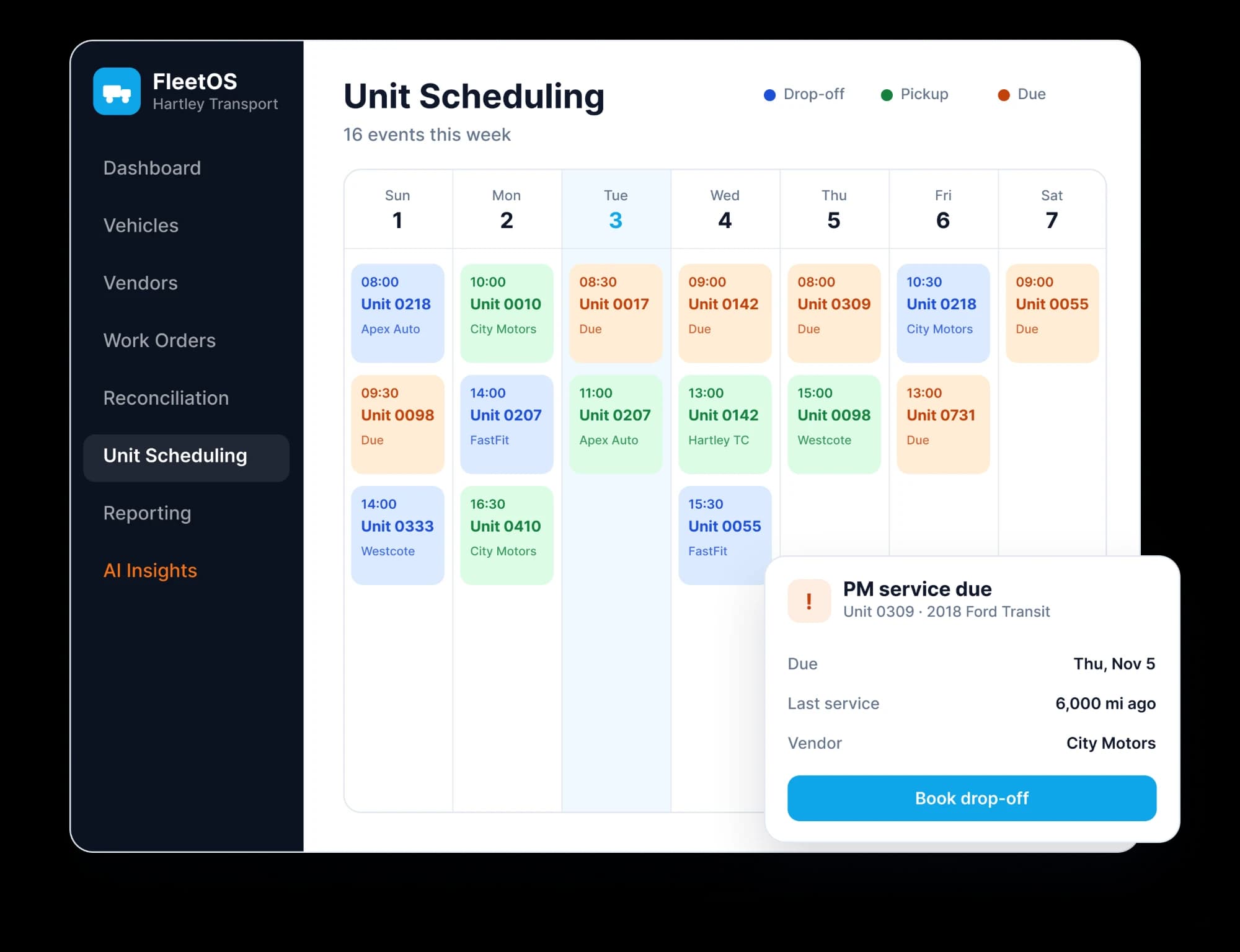
A tractor running long-haul isn't at the yard when the interval comes due, so PM has to be planned against where the unit will be and what it's carrying. FleetOS surfaces units approaching a milestone by mileage or hours, so service can be grouped and sequenced against how many units dispatch can release, rather than arriving as a surprise that costs a booked load.
What should a truck fleet measure that it probably doesn't?
Days to return to service, split by cause and by whether the repair happened at base or on the road.
Cost per mile is well tracked in trucking. What almost no carrier can produce is the split between days lost to approvals, to parts, to shop capacity, and to simply not knowing where a unit was. The on-road versus at-base cut usually surprises people most. More in how fleet operators measure maintenance performance.
Key facts
- A down truck carries four simultaneous costs: the load, the driver, a potentially stranded trailer, and the delivery commitment.
- Heavy-duty sits at the top of the $500–$1,500 per day downtime range before load and driver costs are counted.
- Breakdowns away from base go wherever the tow takes them, which is usually where a fleet loses sight of the repair.
- Inspection paperwork and maintenance history are usually held separately, so a defect and its correction sit in different places.
- PM on long-haul units has to be planned against the dispatch plan, because the unit isn't at the yard when the interval comes due.
Truck fleet FAQs
What is truck fleet maintenance software?
Does FleetOS keep inspection records?
Can we track trailers as well as tractors?
How does PM scheduling work for long-haul units?
How is FleetOS priced for a truck fleet?
Keep every truck and its record together
Every unit, at any shop on the network, with its repair and inspection record on one file. Your shops need nothing new.